NEURO RECODE
YOUR SESSION WAS GETTING EXPIRED . REFRESH THE PAGE AND GET FULL ACCESS
Why Your Mind Repeats The Same Fear — And What Actually Changes It
Anxiety, overthinking, palpitations, negative self-talk — understand where they actually come from. A complete foundation session on the brain, the mind, and how reprogramming works.
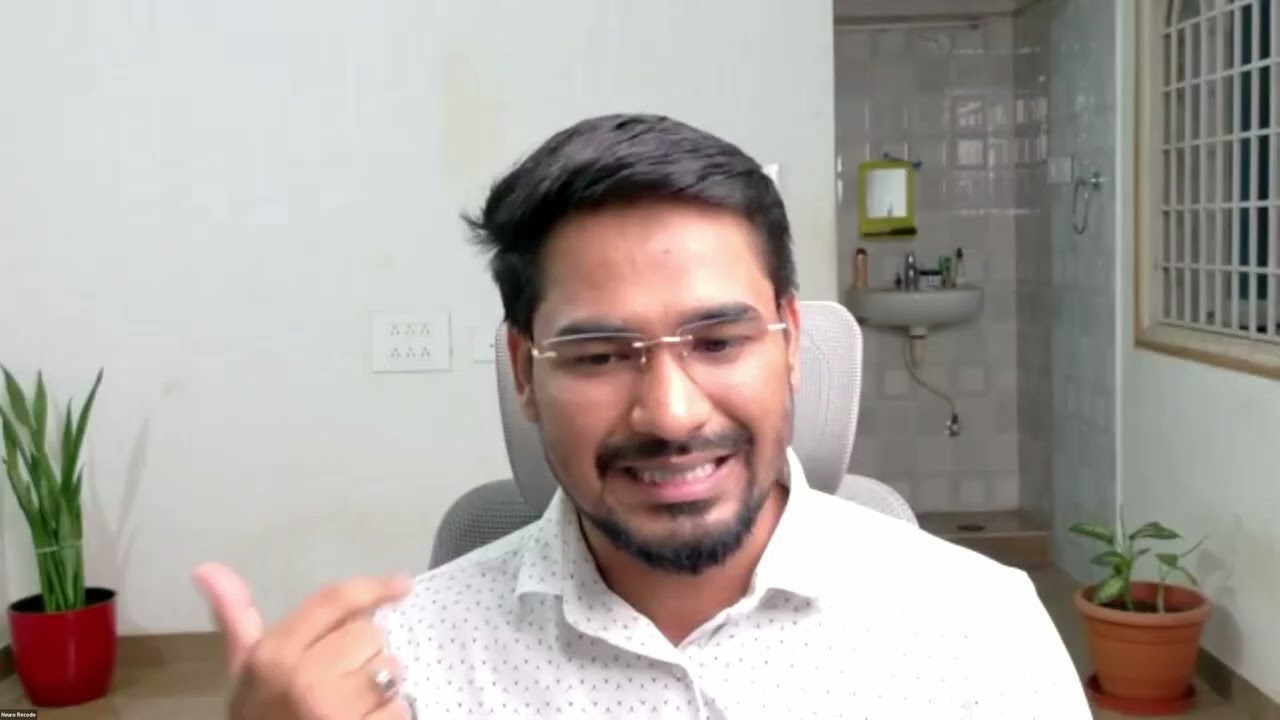
Watch the full session before booking. Everything is explained step by step.
CONTACT US
Call or WhatsApp for guidance in Tamil — Monday to Saturday.
What This Session Covers
Session Notes
A clean, readable summary of everything covered in the video.
This is the first session in a longer series, not a one-off talk. Follow the ground rules, stay for the full session, and post your questions in the community group — every question raised there gets answered in the sessions that follow.
Come in with attention and an open mind. What is shared here is foundational: if the foundation is understood correctly, everything taught later becomes far easier to apply.
When the room was asked what brought them here, the same answers came back again and again: overthinking. Negative self-talk. Palpitations. Dizziness. Fear of examinations. Fear in social situations. Fear of death. Fear of a heart attack. Some had been carrying it for six months. Others for five, fifteen, even fifty years.
Anxiety is not one single thing. It shows up in different forms, and most people carry more than one:
- Social anxiety — fear that appears in front of people, on a stage, in a group
- Generalised anxiety — a constant background worry with no single cause
- Obsessive thoughts and repeated actions — the same thought or check, again and again
- Phobia — an intense fear the logical mind knows is out of proportion
- Relationship anxiety — fear centred on a specific person or bond
- Health anxiety — the most common of all; repeated tests, repeated reassurance, no lasting relief
- Panic — sudden, overwhelming waves of fear
- Fear following a difficult past event — the past still setting the body's alarm today
Most people describe anxiety by its symptoms — the racing heart, the tight throat, the spinning thoughts. But the symptom is the smoke. It is not the fire.
Anxiety is psychosomatic: it begins in the mind, and the body translates it. The mind creates the pattern; the chest, the breath, the stomach and the sleep carry it out.
This is why symptom-level relief helps but does not last. A breathing exercise can calm the body in the moment — that is real and it is useful. But if the underlying pattern was never touched, the same feeling returns tomorrow.
Note: this session is educational. It is not a substitute for consulting a qualified doctor, and no one should stop or change any prescribed medication based on it.
This is the single most important distinction in the session.
The brain is hardware. It is physical — water, fats, proteins, roughly 80 billion neurons. You can touch it, scan it, weigh it.
The mind is software. It is not physical. You cannot hold it. It is the programming running on top of the hardware.
Think of a smartphone. The screen, the buttons, the battery — that is the brain. The operating system and the apps running on it — that is the mind. Two people can have the same phone and a completely different experience, because the software is different.
Here is the problem. Human hardware has evolved enormously. But most people are running an advanced brain on software that was installed in childhood and never updated — an advanced laptop still running Windows 98. The hardware is not the bottleneck. The software is.
And an outdated system has no real protection. A single WhatsApp message, one piece of news, one comment — and the whole system reacts. That reaction is not weakness. It is an old programme doing exactly what it was written to do.
Picture an iceberg. Only a small part is visible above the water.
Conscious mind — roughly 10%. This is awareness, logic, analysis, deliberate choice. This is the part reading these words right now.
Subconscious mind — roughly 90%. No awareness here, but constant processing. Habits, reactions, emotional responses, the things you do without deciding to do them.
Unconscious mind — deeper still. Almost no processing, mostly storage. Every memory, every image, every association held from years ago. Close your eyes, imagine an apple — you did not build it, it was retrieved. That is storage at work.
Notice the imbalance: 10% of the power, 90% of the responsibility. Awareness sits in the small part. Control sits in the large part.
This is exactly why change fails. Someone genuinely decides to change — and that decision is made in the conscious 10%. The pattern lives in the other 90%. Nothing at that level was touched, so within a few days the old behaviour returns.
A rider sits on a horse pulling a cart. The rider is your conscious mind. The horse is your subconscious and unconscious mind.
Which one is physically more powerful? The horse — by far. The rider cannot pull the cart. The horse can.
Now three situations:
- The rider gives no instruction. The horse simply repeats whatever route it has always taken. Old programme, old result.
- The rider gives instruction in the wrong language. The horse does not respond. Nothing changes, and the rider concludes change is impossible.
- The rider gives clear instruction in the horse's own language. The horse moves. The cart moves. Everything changes.
Most people are stuck at one and two. They keep shouting at the horse in a language it does not speak.
Your conscious mind thinks in Tamil, in English, in words. Your subconscious does not.
It responds to images, sounds, and felt sensations. That is its native language — and it is why structured techniques work where instruction and self-criticism fail. Breathing work, guided imagery, written practice, deliberate attention: these are not decoration. They are simply the correct language for the part of the mind that actually holds the pattern.
Once you can communicate with it properly, the vocabulary changes from "why can't I stop this" to something far more useful:
This Session Is For You If…
This is a learning session, not a medical consultation. If you are under a doctor's care, continue it.
About Neuro Recode
Neuro Recode Private Limited is a Tamil-first, online-first mental wellness training company. Every session is delivered live in Tamil by trained practitioners, using structured NLP and neuroscience-based methods. Our work is human-led — real people, real conversations, in your own language.